
On the responsibilities we inherit, the women everyone depends on, and the things our mothers choose not to pass down.
NOVEMBER 5, 2026 · THE WORKING CLASS SERIES
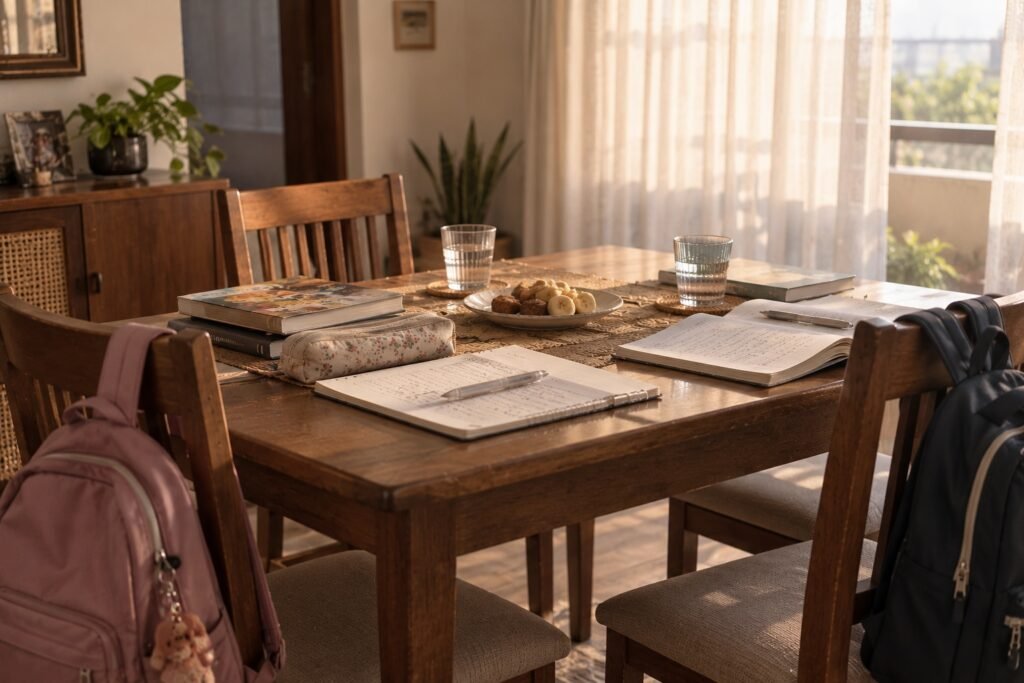
Some things become so ordinary that we forget how much they hold.
Ever since I moved out, I’ve gone home to my childhood house on weekends.
One Saturday afternoon, I was lying on my mother’s bed when she said something I haven’t stopped thinking about.
Dalian n’yo ngang magsilaki, para makapagtrabaho na kayo. Napapagod na ako.
Hurry up and grow up so you can start working. I’m getting tired.
My mother told me her father used to say this to them when they were growing up.
He was a security guard, and my grandmother was a seamstress. They had eight children, my mother being the second eldest. There were ten people in the family, and whatever money came into the household had to stretch a long way.
I think about that sentence sometimes.
Not because I believe my grandfather was cruel for saying it. I never knew what his days were like, how tired he was when he came home, or what it meant to provide for eight children on a security guard’s salary.
I imagine there were days when he was simply exhausted.
But I find myself thinking about what those words might have meant to the children hearing them.
Hurry up and grow up.
Not so you can discover what you want to do with your life.
Not so you can travel, fall in love, or become whoever you want to be.
Grow up so you can work.
So you can help.
So I can finally rest.
There is something about growing up with that expectation that I have only begun to understand as an adult.
For some children, adulthood is something they look forward to because it promises independence.
For others, it means becoming old enough for the family to depend on them.
My mother belonged to the second kind.
My mother started working young.
She used to sell kakanin under the hot sun, earning what she could to help her family.
Eventually, she put her education on hold so she could support her siblings.
They needed to study.
She could wait.
I grew up hearing stories like this without thinking very deeply about them. They were part of the family history, things my mother would mention when talking about how different life used to be.
I knew she had worked hard.
I knew she hadn’t grown up with much.
I knew she had helped her siblings.
But I don’t think I understood what it meant to be the child who had to wait.
In the Philippines, we hear stories about older siblings sacrificing for younger ones all the time.
An older brother pays for his sister’s tuition. A daughter starts working so her siblings can finish school. Someone leaves home to earn money, and the family remembers what that person made possible.
We tell these stories with pride.
And I understand why.
There is something admirable about helping the people you love, especially when you have very little yourself.
But I’ve started wondering about the parts of these stories we don’t usually discuss.
What happens to the plans of the person who stops studying?
What does she do with the years she expected to spend in school?
And when everyone is grateful for what she has done, does anyone think to ask what she gave up?
I don’t know how my mother felt when she stopped studying.
I don’t know whether she was disappointed, angry, or simply accepting of what needed to be done.
I haven’t asked her.
For most of my life, I understood that part of her story as evidence of how hardworking she was.
Now I think about it differently.
My mother was once a young woman who wanted an education.
And for a time, she couldn’t have one.
My mother eventually returned to college.
She was around twenty-seven, and my older brother had already been born.
I don’t know how she managed those years. I don’t know who looked after my brother while she attended classes or how she balanced studying with the responsibilities she already had.
I only know that she went back.
She finished her education, became a teacher, and eventually became a school principal.
I think about that progression sometimes.
A little girl selling kakanin under the sun became a woman responsible for leading a school.
It would be easy to turn that into a story about perseverance. About how hard work pays off and how people can achieve anything if they want it badly enough.
But I don’t think that’s the whole story.
My mother succeeded, yes.
That doesn’t mean the years she spent away from school no longer mattered.
It doesn’t mean putting her education aside was something she needed to experience to become the person she is today.
Sometimes, I think we are too quick to turn difficult circumstances into lessons about strength.
We admire people for overcoming things without always questioning why they had to overcome them in the first place.
My mother eventually got the education she wanted.
But she had to wait until she was already raising a child to return to it.
That part matters, too.
I was seven when my father retired.
I’m thirty now, which means my mother has been our family’s main breadwinner for roughly twenty-three years.
When my father retired, my uncle—my mother’s brother—suggested transferring my brother and me to public school.
It was a practical suggestion. Private education was expensive, and our family’s financial circumstances had changed.
My mother refused.
She wanted us to stay in the schools she had chosen for us.
She wanted us to have the kind of life she had once aspired to.
I didn’t know about that conversation when I was seven.
I knew where I went to school. I knew who my classmates were. I knew whether I had finished my assignments.
I didn’t know my education had become a subject of discussion among adults.
School was simply school.
It wasn’t until much later that I understood keeping things the same had been a decision.
My mother had made plans for us, and she didn’t want our circumstances to change those plans.
I want to be clear that this wasn’t about public schools being inferior. Many Filipino children receive excellent educations in public schools, and transferring would have been a perfectly reasonable choice.
But my mother had made plans for us, and she didn’t want our circumstances to change those plans.
So she continued working.
And beyond her regular job, she took on side jobs.
She was strict about school. She cared about our grades, our performance, and whether we took our education seriously.
Growing up, I didn’t always appreciate that.
Sometimes, I thought she was too strict.
Now I think about the years she spent away from school and the effort it took for her to return.
I wonder whether that had something to do with how much she valued our education.
Perhaps she understood what it meant to lose access to something I had always taken for granted.
I don’t know if that’s how she would explain it.
There is something strange about growing up inside a life someone else has worked very hard to give you.
You don’t see the decisions that made it possible.
You see the life itself.
The school uniform hanging where it always hangs. The notebooks that need covering before classes begin. The shoes that eventually need replacing.
You worry about exams and friendships and whether your classmates have nicer things than you.
You complain when your parents say no.
You assume the life you know is simply the life you have.
I was no different.
I didn’t spend my childhood thinking about how much my education cost or how many hours of work went into paying for it.
The girl who had once stopped studying so her siblings could continue belonged to a story from long ago.
Only as an adult have I begun to see how closely our lives were connected.
My mother had once been unable to continue her education.
My brother and I never had to make that choice.
But there was another difference between the way my mother grew up and the way she raised us.
And I think it’s the one that matters most.
My grandfather used to tell his children to hurry up and grow old enough to work because he was tired.
My mother never said that to us.
She never told my brother and me that we would have to provide for her when she retired.
She never treated our education as an investment she expected us to repay.
She never raised us with the understanding that we would eventually become her financial safety net.
Instead, she remained ours.
Even as we grew older, she continued to be someone we could turn to.
I think about that distinction a lot.
In the Philippines, supporting your parents is often understood as part of being a good son or daughter.
Adult children send money home. They pay bills, contribute to household expenses, help younger siblings finish school, or take responsibility for their parents’ needs as they grow older.
Sometimes, these arrangements are freely chosen.
Sometimes, they’re simply expected.
And sometimes, the distinction between the two becomes difficult to recognize.
I don’t think there’s anything wrong with wanting to support your parents.
There are many reasons someone might choose to do so. Love, gratitude, financial circumstances, or simply the understanding that families help one another.
But I think there is a difference between choosing to help and growing up knowing that your parents’ future depends on you.
My mother understood what it meant to be needed by her family before she had finished building a life for herself.
Yet she never asked us to carry the same expectation.
She wanted us to study.
She wanted us to build careers.
She wanted us to be able to provide for ourselves.
And whatever she had to do to make those things possible, she found a way.
I don’t know whether she ever thought of this as doing something differently from her own parents.
Maybe she simply wanted us to have more opportunities than she did.
Maybe she never considered the comparison at all.
But I see it now.
My grandfather spoke of the day his children would be old enough to help carry the family’s responsibilities.
My mother never made her own retirement something my brother and I had to prepare for.
My mother has always preferred doing things her own way.
She has her own standards, her own methods, and strong opinions about how something should be done.
Sometimes, even when someone offers to help, she’d rather handle it herself.
I know that tendency well.
And I think I inherited some of it.
I’ve always wanted to earn my own money, make my own decisions, and build a life around the things I value.
For a long time, I thought my desire for independence made me different from my mother.
She was practical, careful about money, and strict about what was necessary.
I wanted the freedom to choose things simply because I liked them.
But the older I get, the more I recognize something familiar between us.
We both like knowing that things have been done properly.
And we both seem more comfortable finding a solution ourselves than waiting for someone else to provide one.
I used to think of this as independence.
Now I’m beginning to wonder whether independence can become something else when you’re so accustomed to being responsible that relying on another person feels uncomfortable.
My mother has spent much of her life being someone other people could depend on.
First her siblings.
Then her own family.
And throughout her career, the students, teachers, and colleagues who looked to her for guidance.
There was always someone who needed something from her.
She became very good at finding ways to make things work.
And I wonder whether, after enough years of being the capable one, asking for help starts to feel unfamiliar because you’ve become accustomed to being the person who knows what to do.
The person who figures things out.
The person who finds a way.
Perhaps it isn’t that my mother never needed help.
Perhaps asking for it simply became difficult.
I don’t want to assume that she experienced every responsibility as a burden.
She may have found enormous satisfaction in her work, in becoming a principal, and in being able to provide for our family.
She has accomplished things she deserves to be proud of.
But being proud of what you’ve built doesn’t mean you have to be the person holding everything together all the time.
There is a difference between being independent and feeling that you have no other choice.
Between enjoying responsibility and being unable to put it down.
Between not needing help and finding it difficult to ask.
I think about how easily we come to expect capable women to keep managing. When someone has spent years being the person everyone turns to, we may forget to ask whether she needs something, too.
I don’t know whether my mother would agree with any of this.
Perhaps she would tell me that she has always managed perfectly well.
Perhaps she would say that she simply likes doing things her way.
That would sound like her.
Sometimes, I think about the little girl my mother used to be.
The second eldest of eight children.
A security guard’s daughter.
A seamstress’s daughter.
A girl who sold kakanin under the hot sun.
I wonder what she wanted for herself.
Whether she imagined becoming a teacher.
Whether she ever pictured herself leading a school.
Or whether, at that age, she was simply thinking about the kakanin she needed to sell and the money she hoped to bring home.
There are things I still don’t know about her.
What it felt like to stop studying.
What made her decide to go back.
Whether becoming a principal was something she had always wanted.
Whether there were moments when she wished someone else would take care of things.
And what she wants now, after spending so many years making things possible for other people.
I have known my mother for thirty years.
I know her as the woman who raised me, who was strict about school, who worked and took on more work, and who always seemed to know how things should be done.
Some of her stories I heard as a child, too young to understand what they meant. Others, like the one about her father, I heard only recently.
I keep returning to his words.
“Dalian n’yo ngang magsilaki, para makapagtrabaho na kayo. Napapagod na ako.”
I think about a father who was tired.
About a daughter who learned to work young.
About the education she put aside, and the one she eventually returned to.
And about the children she raised without ever asking them to become responsible for her future.
I want to ask her.
I don’t know whether she’ll have answers ready, or whether she’ll think there’s anything worth telling. But I want to hear the stories again, this time paying attention to the woman inside them.
My mother never asked us to become her safety net.
She was always ours.
I’ve known what she did for me for thirty years.
I’m only beginning to know the woman who did it.
A quiet space for conversations about womanhood, class, healing, and the things we carry into the lives we're making.
Join The Circle →One letter a week. Nothing more.
Continue the Conversation
Was there a woman in your life who carried more than she ever spoke about? You’re welcome to share what you’ve come to understand about her.